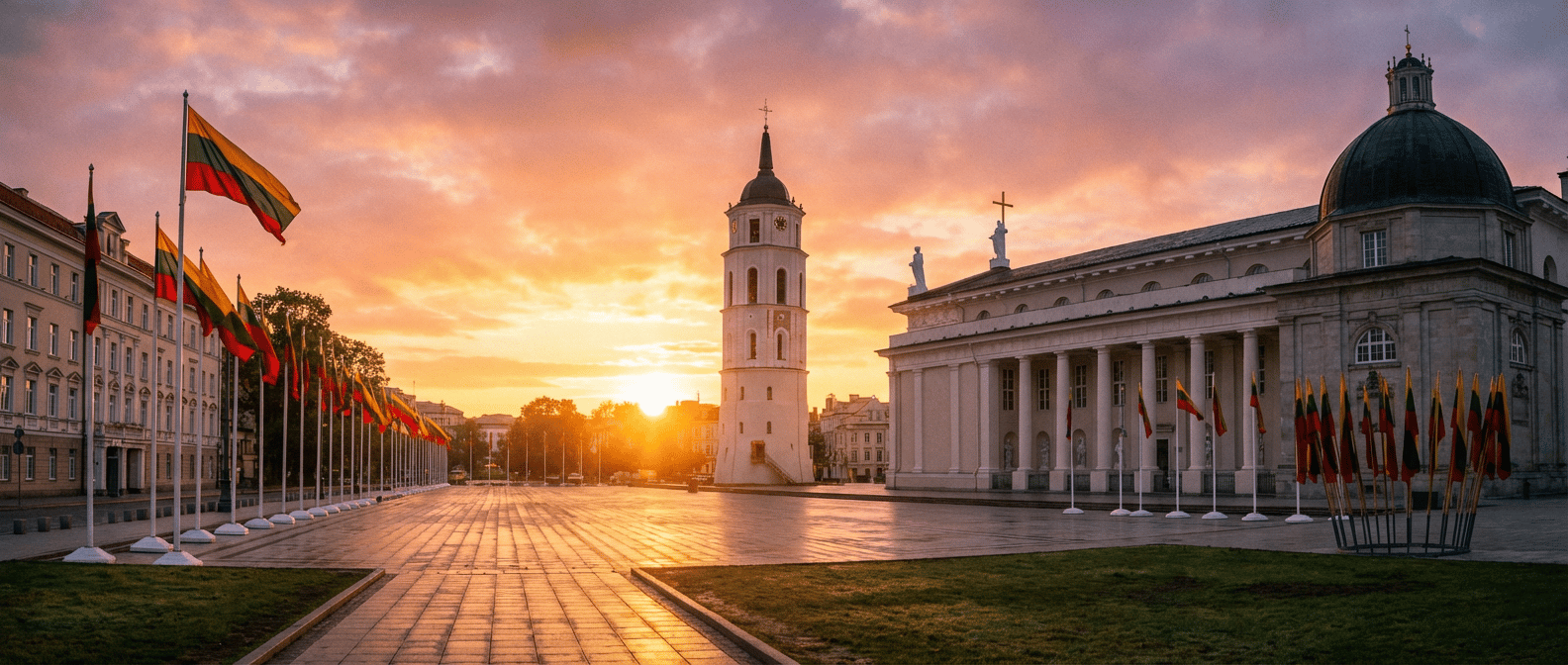
A Nation Under Occupation: Lithuania's Long Road to 1990
On March 11, 1990, in a wood-paneled hall in Vilnius, a small Baltic nation did something that no republic had ever dared to do: it declared its independence from the Soviet Union. Lithuania, a country of barely three and a half million people, became the first Soviet republic to break away from Moscow's grip, setting into motion a chain of events that would ultimately shatter the most powerful communist empire the world had ever known [1]. It was an act of extraordinary political courage — one carried out not with tanks or guerrilla warfare, but with a parliamentary vote, a legal argument, and an unshakeable national will forged across fifty years of occupation.
Yet to understand why that single day reverberates so powerfully through history, one must first understand what preceded it. The declaration signed on that spring day in 1990 was not the birth of a new state but, as Lithuania's leaders were careful to emphasize, the restoration of a state that had been illegally extinguished [2]. Behind that legal distinction lay decades of suffering — mass deportations, cultural erasure, political terror, and the systematic attempt to dissolve an ancient European nation into the vast, homogenizing machinery of the Soviet system. The courage displayed on March 11 cannot be measured without first reckoning with the depth of what Lithuania endured and what its people refused to forget.
"A small country making a very big statement" — that is how Lithuania's act has been described, but the statement had been building, silently and stubbornly, for half a century [7].
The Annexation of 1940 and the Erasure of Sovereignty
Lithuania's forced incorporation into the Soviet Union in 1940 was not a voluntary accession but a calculated act of imperial aggression. Following the secret protocols of the 1939 Molotov-Ribbentrop Pact between Nazi Germany and the Soviet Union, the Baltic states were assigned to Moscow's sphere of influence. In June 1940, Soviet troops occupied Lithuania under the pretext of mutual security, and a rigged election installed a puppet parliament that promptly "requested" admission into the USSR. The independent Republic of Lithuania — which had declared its own sovereignty on February 16, 1918, and built a functioning democracy, a national university system, and a vibrant cultural life — was erased from the map overnight.
What followed was a campaign of political repression that targeted the very foundations of Lithuanian society. The Soviet authorities moved swiftly to eliminate anyone who might organize resistance:
- Political leaders, military officers, and government officials were arrested, imprisoned, or executed
- Intellectuals, teachers, clergy, and journalists were identified as threats to the new order
- Landowners, prosperous farmers, and business owners were dispossessed and marked for deportation
- Members of civic organizations and cultural societies were placed under surveillance
The first wave of mass deportations to Siberia and other remote regions of the Soviet Union began in June 1941, just days before the German invasion temporarily displaced Soviet control. Entire families — men, women, children, the elderly — were loaded onto cattle cars in the middle of the night and shipped thousands of miles to labor camps, forced settlements, and frozen wastelands. A second, even larger wave of deportations followed after the Soviet re-occupation in 1944-1945, continuing into the early 1950s. These deportations were not random acts of cruelty; they were a deliberate strategy to decapitate Lithuanian society, removing its most educated, capable, and nationally conscious citizens.
Russification and the War on Identity
Beyond physical repression, the Soviet regime waged a quieter but equally devastating war against Lithuanian identity itself. The policy of Russification sought to replace Lithuanian language, culture, and historical memory with Soviet-Russian alternatives. Russian was imposed as the dominant language of government, higher education, and professional advancement. Lithuanian history was rewritten to portray the nation's incorporation into the USSR as a liberation rather than an occupation [4]. Religious practice — particularly Catholicism, which was deeply intertwined with Lithuanian national consciousness — was severely restricted, with churches closed, clergy persecuted, and religious education banned.
The Soviet project in Lithuania was not merely political domination; it was an attempt to convince an entire people that their nation had never truly existed — and that its disappearance was both inevitable and just.
Yet this is precisely where the Soviet strategy contained the seeds of its own failure. The very intensity of Russification kept national identity alive as an act of quiet defiance. Families whispered Lithuanian history to their children. Underground publications — known as the samizdat — circulated forbidden texts. The Lithuanian Catholic Chronicle, secretly published for nearly two decades, documented religious persecution and became one of the longest-running underground publications in the entire Soviet bloc. Partisan fighters, known as the "Forest Brothers," waged armed resistance well into the 1950s, long after most of Eastern Europe had acquiesced to Soviet control.
The Significance of Memory
What made Lithuania's path to 1990 so remarkable was that the nation never accepted the legitimacy of its occupation. Western democracies, led by the United States, formally maintained a policy of non-recognition of the Soviet annexation of the Baltic states throughout the entire Cold War. This legal continuity mattered enormously. When Lithuania's Supreme Council voted to restore independence on March 11, 1990, it did so by invoking the legal continuity of the pre-war republic — arguing that Soviet rule had been an illegal interruption, not a legitimate transformation [6]. This was not mere symbolism. It was a profound legal and moral argument that distinguished Lithuania's declaration from a secessionist movement and framed it instead as the correction of a historic crime. That framing opened the path that other republics would soon follow, ultimately leading to the complete dissolution of the USSR [1].
The Act That Shook an Empire: What Happened on March 11, 1990
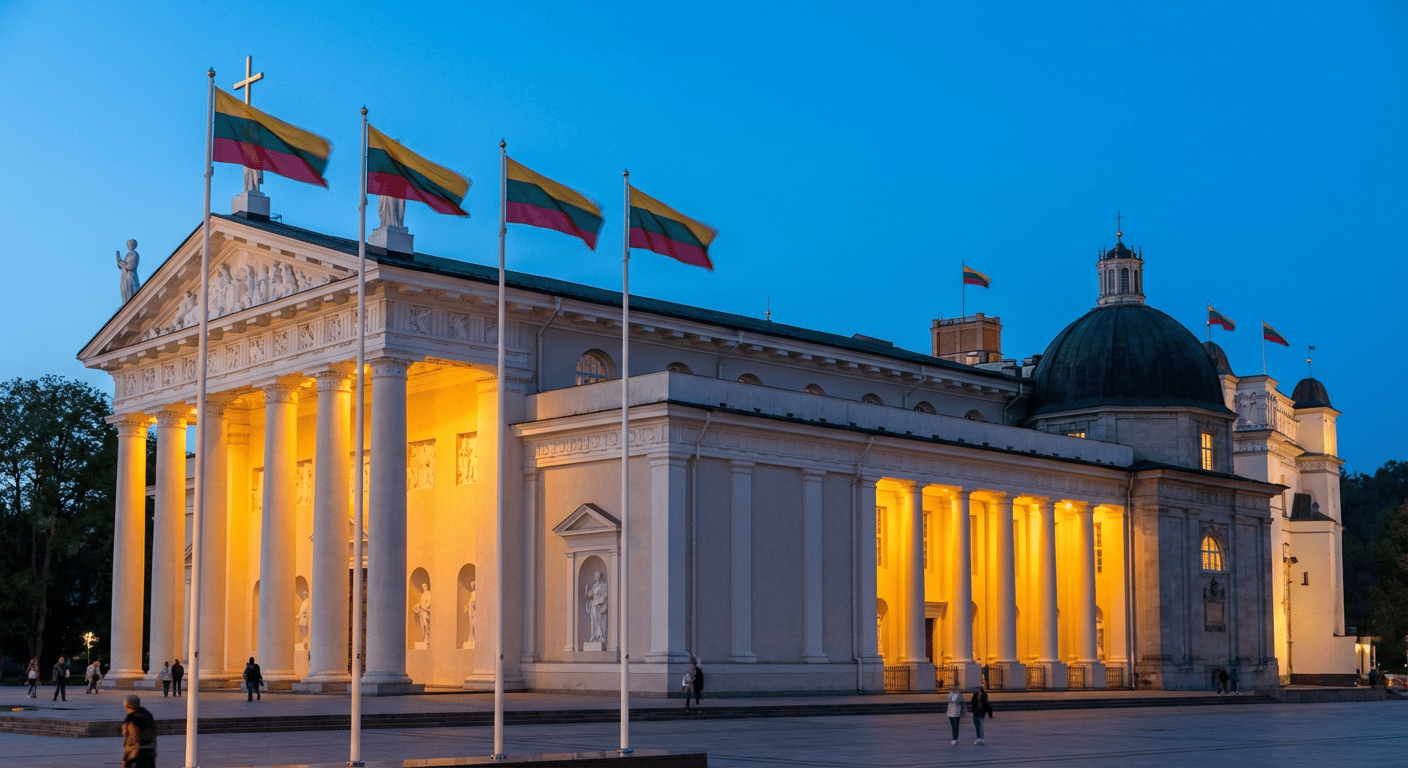
The session that would change the course of European history began not with a thunderclap, but with the methodical procedures of parliamentary democracy. Inside the Supreme Council building in Vilnius, newly elected deputies gathered with a sense of gravity that transcended ordinary politics. What unfolded over the course of that day was not merely a legislative act — it was a calculated, deliberate rupture with an empire that had held Lithuania captive for half a century. The Supreme Council adopted the Act on the Restoration of the Independence of Lithuania, making it the first Soviet republic to formally sever ties with Moscow [6]. In doing so, these deputies understood they were not simply voting on a resolution; they were placing their nation — and themselves — directly in the crosshairs of a superpower.
The Political Architecture of a Historic Vote
The groundwork for March 11 had been laid with extraordinary precision by Sąjūdis, the Lithuanian reform movement that had evolved from a cultural awakening into a full-fledged independence campaign. Under the intellectual and strategic leadership of Vytautas Landsbergis, a music professor turned political architect, Sąjūdis had swept the February 1990 elections to the Supreme Council, securing an overwhelming majority of seats. This electoral mandate was critical — it gave the independence movement not just moral authority, but democratic legitimacy that would prove essential in the diplomatic battles to come.
Landsbergis and his allies understood that timing was everything. The Soviet Union under Mikhail Gorbachev was caught between the contradictions of glasnost and the instinct to preserve the empire. Moving too slowly risked allowing Moscow to consolidate a counter-strategy; moving too quickly risked provoking a military response before international attention could be mobilized. The Sąjūdis leadership chose a middle path of bold but legally grounded action, framing the declaration not as a secession but as a restoration — a crucial legal distinction asserting that Lithuania's incorporation into the USSR in 1940 had been illegal from the start.
The genius of the March 11 declaration lay in its legal framing: Lithuania was not breaking away from the Soviet Union — it was reasserting a sovereignty that had never been legitimately extinguished.
The vote itself was decisive. The deputies who cast their ballots in favor of the Act did so knowing full well the risks involved. Lithuania restored its independence and became the first nation to declare independence from the Soviet Union [7], a move that opened the floodgates for other republics contemplating their own paths to sovereignty [8]. The near-unanimity of the vote reflected not just political consensus but a collective act of courage — each deputy's name would be recorded, each one a potential target for Soviet retribution.
Moscow's Furious Response
The Kremlin's reaction was swift and punishing. Gorbachev, who had staked his political career on controlled reform rather than imperial dissolution, viewed Lithuania's declaration as an existential threat to the entire Soviet system. If one republic could simply walk away, the precedent would be catastrophic for Moscow's hold on the remaining fourteen.
The Soviet response escalated through several phases:
- Diplomatic pressure, including demands that the declaration be rescinded immediately
- Economic blockade, with Moscow cutting off oil and gas supplies to Lithuania in an attempt to strangle the young nation's economy
- Military intimidation, including the movement of Soviet troops and armored vehicles through the streets of Vilnius
The economic blockade was designed to demonstrate a brutal lesson: that independence without Moscow's consent meant isolation, deprivation, and suffering.
The blockade, which severely restricted energy supplies, was intended to break Lithuanian resolve within weeks. It was a strategy built on the assumption that a small nation could not endure material hardship in the name of an abstract principle. Moscow gravely miscalculated. Rather than fracturing Lithuanian society, the blockade unified it. Citizens rationed fuel, shared resources, and treated the deprivation as confirmation that Soviet rule had always been about coercion rather than partnership.
Why the World Was Watching
The international community found itself in an awkward position. Western governments, particularly the United States under George H.W. Bush, had never formally recognized Lithuania's annexation by the Soviet Union. Yet they were reluctant to destabilize Gorbachev, whom they viewed as a reformist partner. This tension between principle and pragmatism meant that Lithuania's struggle played out on a global stage where moral clarity and geopolitical calculation were constantly at odds. What Lithuania had done, however, could not be undone — the precedent was set, and the empire had begun to crack.
“ Lithuania restored its independence and became the first nation to declare independence from the Soviet Union — a small country making a very big statement.
The First Domino: How Lithuania Inspired the Fall of the Soviet Union
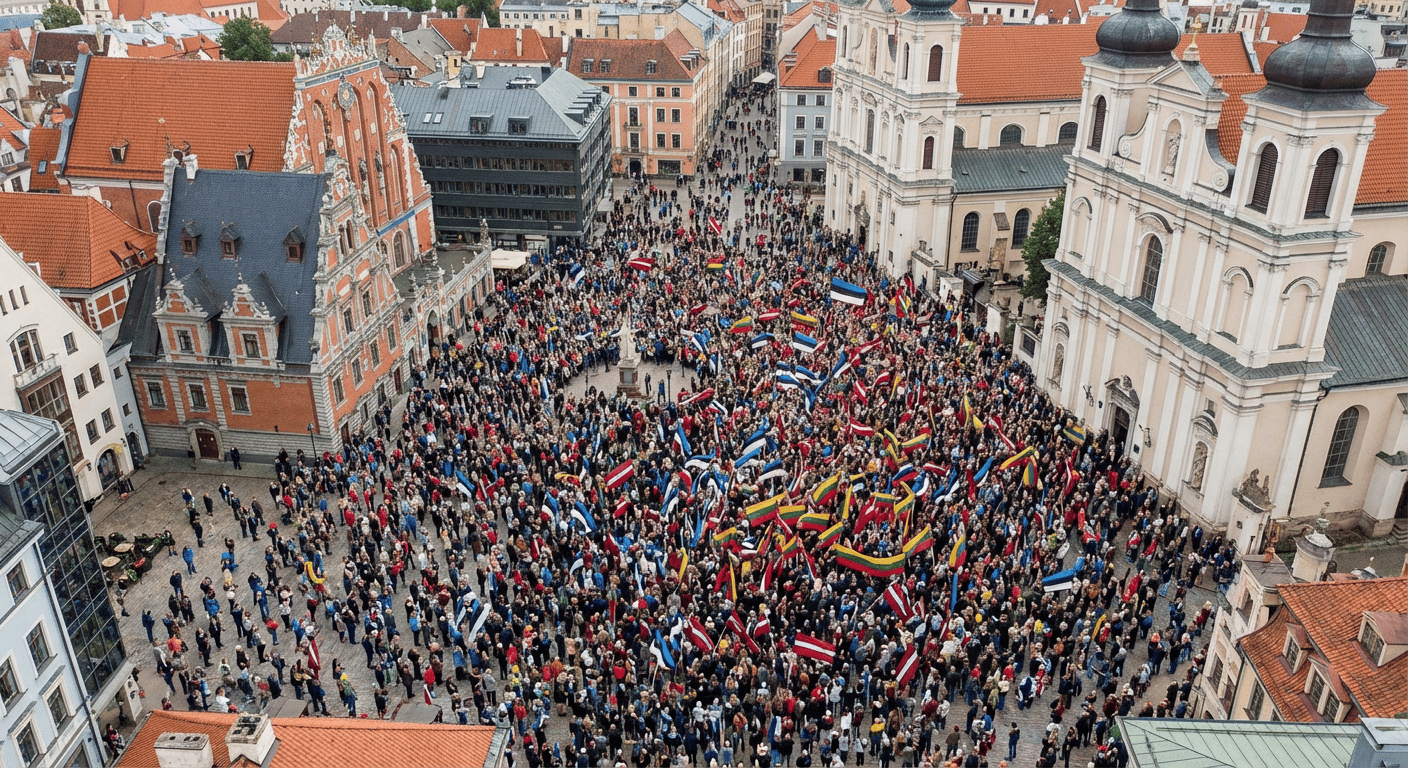
When Lithuania restored its independence on March 11, 1990, becoming "the first Soviet Republic to leave Moscow and leading other states to" follow [1], the Kremlin faced a dilemma it had never anticipated. The Soviet leadership could crush the rebellion with overwhelming force, as it had done in Hungary in 1956 and Czechoslovakia in 1968, or it could accept the unraveling of a union that had seemed eternal. What Moscow could not do — what no empire in history has ever managed — was contain the psychological shockwave that Lithuania's courage sent rippling across an entire continent. A small country had made, as observers noted, "a very" large statement about the fragility of authoritarian power [7].
The Baltic Chain Reaction
The most immediate and predictable consequence of Lithuania's declaration was its galvanizing effect on its Baltic neighbors. Latvia and Estonia had walked a parallel path of national awakening throughout the late 1980s, but Lithuania's willingness to act first — to absorb the full weight of Soviet retaliation — fundamentally altered the calculus for both nations. Latvia declared the restoration of its independence in May 1990, and Estonia followed with its own sovereignty declaration shortly thereafter.
What made the Baltic cascade so significant was not merely the sequence of declarations but the strategic interdependence they created. Each successive declaration made it harder for Moscow to respond with force against any single republic without provoking a broader crisis. Lithuania's role as the first mover was therefore disproportionately dangerous and disproportionately consequential. The economic blockade that Moscow imposed on Lithuania in the spring of 1990 — cutting off oil and gas supplies — was precisely the kind of coercive response that might have worked against one isolated republic. But with Latvia and Estonia moving in lockstep, the Kremlin found itself playing a losing game of geopolitical whack-a-mole.
Lithuania's declaration was not just an act of national liberation — it was a proof of concept. It demonstrated to every captive nation within the Soviet sphere that independence was not a theoretical aspiration but an achievable political reality.
Ripple Effects Beyond the Baltics
The consequences of Lithuania's March 11 declaration extended far beyond the Baltic region. Throughout 1990 and into 1991, a succession of Soviet republics issued sovereignty declarations or moved toward outright independence:
- Georgia declared sovereignty in March 1990, just days after Lithuania's act
- Ukraine adopted its declaration of sovereignty in July 1990
- Armenia moved toward independence through a September 1991 referendum
- The Central Asian republics, though less enthusiastic about separation, found themselves swept along by the centrifugal forces Lithuania had unleashed
The critical insight is that Lithuania's declaration delegitimized the Soviet Union as a political construct. Before March 11, 1990, the USSR's territorial integrity was treated as a fixed reality of international politics. After it, the union became something that required active justification — and Moscow proved incapable of providing one.
The Acceleration Toward Dissolution
By the time hardliners in Moscow attempted their ill-fated coup in August 1991, the process Lithuania had initiated was already irreversible. The coup's failure did not cause the Soviet Union's collapse so much as it removed the last obstacle to a dissolution that Lithuania had set in motion seventeen months earlier. This day, as commemorations emphasize, "opened" the path not only for Lithuanian freedom but for the transformation of an entire geopolitical order [8].
What Lithuania proved was that empires do not fall from the outside — they fracture from within, beginning at the edges, where the grip of the center is weakest and the memory of freedom is strongest.
The dissolution of the USSR in December 1991 was the culmination of a process that began with 124 deputies voting in a Vilnius chamber. Lithuania's declaration represented "thirty-six years of freedom from forced occupation, Russification, Soviet rule" [4] — but its significance transcends national liberation. It demonstrated a principle that authoritarian regimes have feared throughout history: that courage, once demonstrated by one small nation, becomes contagious. The Soviet Empire did not collapse because it was defeated militarily or bankrupted economically, though both pressures were real. It collapsed because Lithuania showed the world that it could be defied — and survived.
Thirty-Six Years of Freedom: Modern Lithuania's Transformation
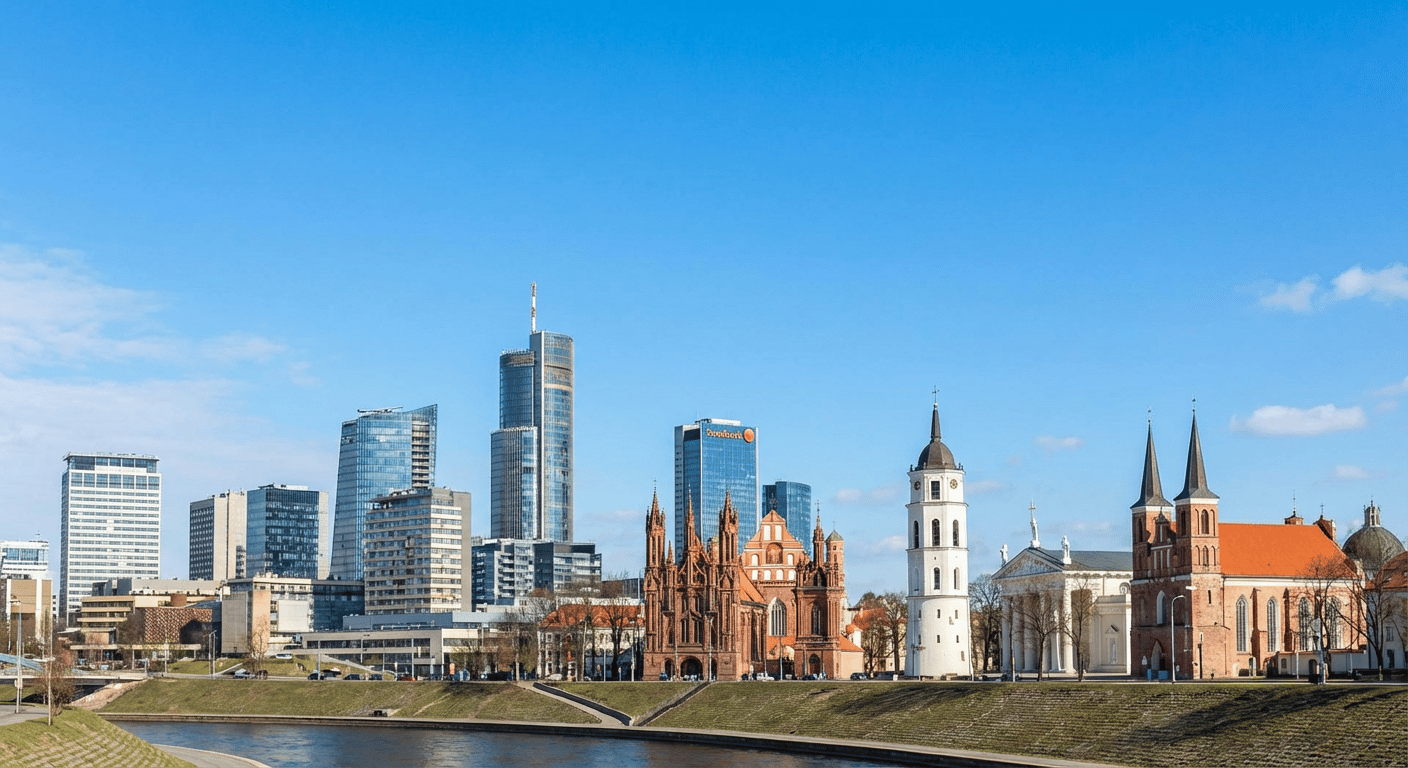
The declaration of March 11, 1990, was an act of extraordinary courage, but courage alone does not build a modern state. What Lithuania has accomplished in the thirty-six years since that fateful day in the Supreme Council is, in many ways, as remarkable as the declaration itself. Transforming a post-Soviet economy ravaged by decades of central planning into a thriving European democracy required vision, sacrifice, and an unwavering commitment to the Western institutions that Lithuania's leaders saw as the ultimate guarantors of the sovereignty they had so boldly reclaimed. Today, as Lithuania commemorates the 36th anniversary of the Restoration of Independence [3], the nation stands as living proof that small countries can shape history — and that freedom, once won, must be defended with the same tenacity that secured it.
From Post-Soviet Chaos to European Integration
The 1990s were brutal. Lithuania's economy contracted sharply as Soviet-era supply chains disintegrated, inflation spiraled, and the country faced an energy blockade imposed by a vengeful Moscow. Yet rather than retreat into isolation or seek accommodation with Russia, Lithuania's political class pursued a strategy of radical Western integration. The goal was clear: anchor the country so firmly within Euro-Atlantic structures that no future Russian government could ever reclaim it.
That strategy bore fruit in 2004, when Lithuania simultaneously joined NATO and the European Union — twin milestones that represented the fulfillment of the promise embedded in the March 11 declaration. NATO membership provided the security guarantee that Lithuania had lacked throughout its history, placing the country under the alliance's Article 5 collective defense umbrella. EU accession opened markets, attracted investment, and connected Lithuanian citizens to the freedoms of movement and opportunity that their parents and grandparents could scarcely have imagined under Soviet rule.
The journey from occupied Soviet republic to full EU and NATO member in just fourteen years represents one of the most compressed and successful democratic transitions in modern European history — a testament to the determination that first manifested on March 11, 1990.
A Tech-Forward Economy and Democratic Culture
Lithuania's economic transformation has been nothing short of extraordinary. Vilnius has emerged as one of Europe's most dynamic fintech hubs, and the country has cultivated a tech-forward economy that leverages its highly educated workforce and digital infrastructure. The same spirit of innovation that led Lithuanian leaders to be the first to break from the Soviet Union [1] now drives a startup culture that punches far above the country's weight.
Equally important is the democratic culture that Lithuania has built. Key achievements include:
- A robust multiparty parliamentary system with regular, free elections and peaceful transfers of power
- A vibrant free press and civil society that serve as checks on governmental authority
- Strong rule of law and an independent judiciary aligned with European standards
- Active civic engagement, particularly among younger generations who view democratic participation as both a right and a responsibility
This democratic resilience is not accidental. It is rooted in the collective memory of what it means to live without freedom — a memory that Lithuania actively cultivates through annual commemorations and civic education [2].
A Vocal Defender of Sovereignty in a Dangerous Neighborhood
Russia's full-scale invasion of Ukraine in 2022 vindicated Lithuania's long-standing warnings about Moscow's imperial ambitions. For years, Lithuanian leaders had been among the most vocal advocates within NATO and the EU for a tougher stance on Russia, often dismissed by Western European capitals as alarmist. History proved them right.
Lithuania's experience of Soviet occupation gives it a moral authority on questions of sovereignty and territorial integrity that few other European nations possess — an authority it has wielded with increasing effectiveness on the international stage.
Lithuania has become a leading supporter of Ukraine's defense, a champion of Belarusian democratic activists like Sviatlana Tsikhanouskaya — who herself has congratulated Lithuania on its independence anniversary, recognizing the country as a beacon of freedom [6] — and a persistent advocate for maintaining the strongest possible sanctions against the Kremlin. The country that was once described as making "a very" significant impact despite its small size [7] continues to demonstrate that national courage is not measured in square kilometers or population figures.
Thirty-six years after that spring day in Vilnius, Lithuania's transformation stands as one of the great success stories of the post–Cold War era — and as a reminder that the boldness of March 11 was not an ending, but a beginning.
How March 11 Is Celebrated: From Vilnius to Chicago and Beyond
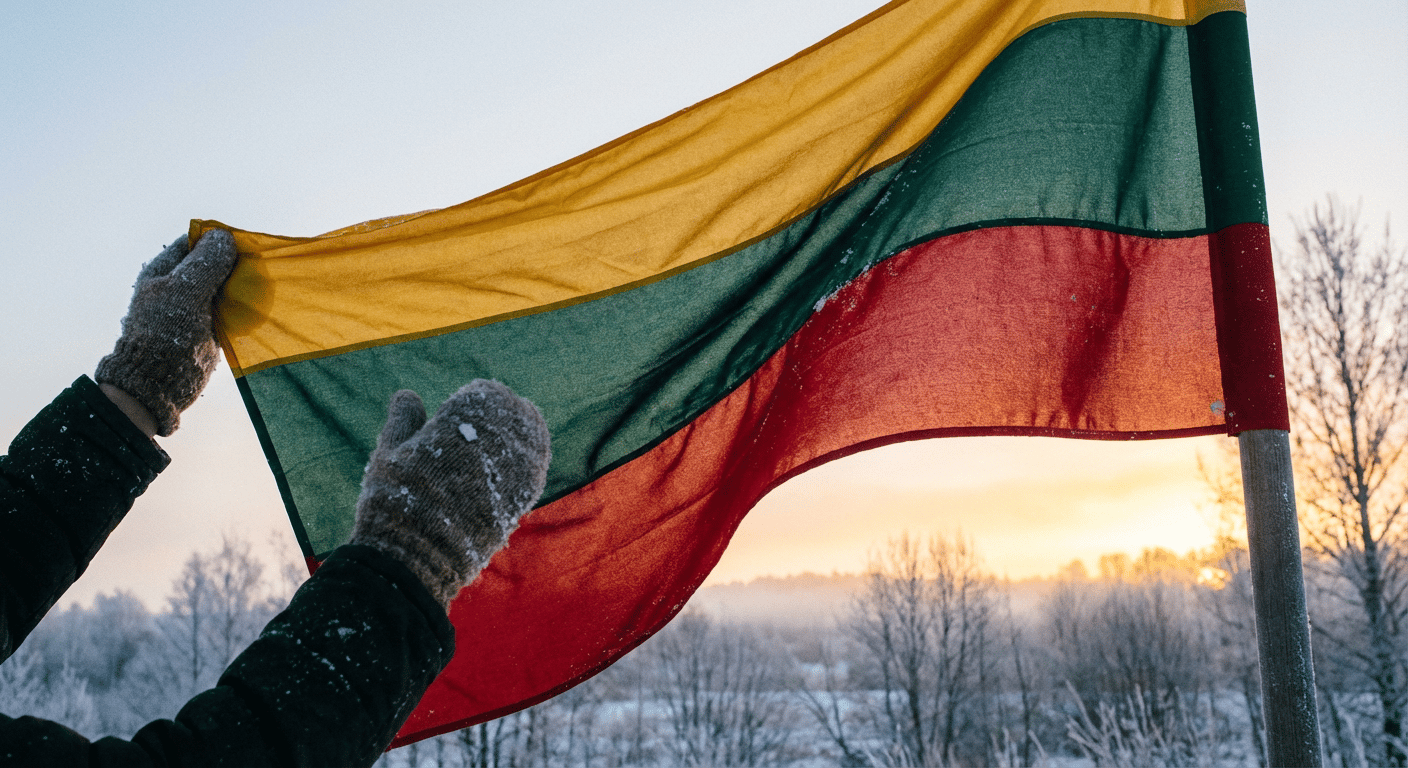
Every year on March 11, Lithuania pauses to remember one of the most defining moments in its modern history [2]. But the commemoration does not stop at Lithuania's borders. From the grand squares of Vilnius to the windswept plazas of Chicago, from Kaunas university halls to diaspora gatherings across four continents, the Day of the Restoration of Independence has become something far larger than a national holiday. It is a living declaration — renewed annually — that the courage of 1990 was not a singular event but an ongoing commitment to freedom that demands vigilance, solidarity, and remembrance.
Celebrations at Home: Vilnius, Kaunas, and the National Ritual
In Lithuania itself, March 11 carries the weight of a civic sacrament. The capital, Vilnius, hosts the most prominent commemorations, with festive events organized around the historic Supreme Council building where the Act was signed. In 2026, Vilnius invited citizens and visitors alike to participate in events described as honoring "the day that opened" a new chapter in Lithuanian and European history [8]. These celebrations typically include solemn flag-raising ceremonies, concerts, public speeches by government leaders, and cultural performances that blend historical reflection with forward-looking optimism.
In Kaunas, Lithuania's second city and its interwar capital, the day resonates with particular historical depth. Kaunas Technical University and other institutions mark the occasion by connecting the restoration to Lithuania's broader academic and cultural renaissance, reminding younger generations that independence was not merely a political achievement but the precondition for intellectual and creative freedom [2]. Across the country, schools hold special assemblies, museums open their doors for free, and Lithuanian flags — the iconic yellow, green, and red tricolor — hang from nearly every balcony and public building.
The power of March 11 celebrations lies not in spectacle but in continuity — each year, the act of remembering becomes itself an act of resistance against the forces that would prefer such history be forgotten.
The Global Diaspora: Chicago and the Worldwide Lithuanian Community
Perhaps nowhere outside Lithuania is March 11 observed with greater passion than in Chicago, home to one of the largest Lithuanian diaspora communities in the world. The city hosts an annual flag-raising ceremony commemorating the anniversary, with the 2026 event marking the thirty-sixth year since Lithuania declared its independence after decades of forced Soviet occupation [3]. These ceremonies are more than symbolic — they are acts of cultural preservation, ensuring that generations born far from the Baltic coast understand the sacrifice that made their freedom possible.
The diaspora's role in sustaining Lithuanian identity during the fifty years of occupation cannot be overstated. Communities in:
- Chicago, where Lithuanian neighborhoods kept language, traditions, and political advocacy alive
- London, Toronto, and Sydney, where smaller but dedicated communities organized annual commemorations
- Washington, D.C., where diplomatic efforts by Lithuanian-Americans helped maintain international non-recognition of the Soviet annexation
These global celebrations serve a dual purpose: they honor the past and they project Lithuanian identity into the future, binding scattered communities to a shared national narrative.
International Solidarity and Renewed Urgency
March 11 has increasingly attracted messages of solidarity from international figures who see Lithuania's story as directly relevant to contemporary struggles for freedom. Belarusian democratic leader Sviatlana Tsikhanouskaya has publicly congratulated Lithuania on its Restoration of Independence Day, recognizing the parallels between Lithuania's fight against Soviet domination and Belarus's ongoing struggle against authoritarianism [6]. Her messages underscore a profound truth: Lithuania's 1990 declaration was not merely a historical event but a template for resistance that continues to inspire nations living under oppression.
As one social media tribute put it, "Freedom looks good on Lithuania" — a simple phrase that captures the enduring radiance of a nation that chose sovereignty over submission [7].
In today's geopolitical climate, with Russia's full-scale invasion of Ukraine casting a long shadow over Eastern Europe, March 11 carries a renewed urgency that would have been unimaginable even a decade ago. Lithuania's celebration is no longer just a commemoration of past courage — it is a reminder that the forces Lithuania defied in 1990 have not disappeared. They have merely changed form. Every flag raised in Vilnius, every ceremony held in Chicago, every message of solidarity from leaders like Tsikhanouskaya is a reaffirmation that the small nation which broke the Soviet empire remains unwilling to take its freedom for granted. Thirty-six years after that extraordinary act of parliamentary defiance [4], Lithuania's March 11 stands as proof that history is not made only by great powers — sometimes, it is made by small nations with immense courage, and the world is better for it.